
Romans 7:7 – What then shall we say? That the law is sin? By no means! Yet if it had not been for the law, I would not have known sin. For I would not have known what it is to covet if the law had not said, “You shall not covet.”
Welcome back to our study of Romans. The apostle has been stressing the fact that justification in God’s sight (salvation) comes through faith in Christ, not in observance of the law. 
This teaching was very difficult for the Jews to accept. They knew that the law was the divine word of God. From the moment they were born, they were instructed to honor and keep the law for it was the sacred covenant between themselves and God.
If they now believed Paul’s doctrine of justification by faith, what was their exact relationship to the law? Were they still bound by it? If it couldn’t justify them in God’s sight, then what was its purpose? Was there any advantage to having it? These were legitimate and important questions in the minds of the Jews.
Here in chapter seven Paul goes into more depth on the law. In our last post, he showed that Christians are dead to the law which means they are no longer bound to trust in it as their means of salvation. Instead, they are free to enter into a new covenant with Christ, who gives us salvation through grace.
In today’s post, Paul defines the relationship between the law and sin. He will prove:
- The law itself is holy, pure and perfect.
- The law does not produce sin within us; it defines and identifies it.
- Sin is the cause of eternal spiritual death. It springs from our own fallen natures.
- Sin works through the law to trap us in condemnation. Nevertheless, this does not make the law evil; it makes sin evil.
Now let’s examine these points in greater detail.
GENERAL SUMMARY: Based on Paul’s assertions in the first six verses of this chapter, the Jews were likely to have objections about his doctrine.
If they were speaking to Paul in person, their objection might be stated this way: “You’ve already said that the divine, holy law is insufficient to justify and sanctify us in the sight of God. Now you are saying that the law stirs up our sinful passions. If that is true, then doesn’t that make the law the cause of sin? And if the law is the cause of sin, doesn’t that make it evil?”
Paul answers their objections by showing that the law itself is divine, holy and pure (just as they had been taught from birth). The point they needed to understand is that the law does not cause sin; it identifies and defines it. Evil does not originate in the law, but in the sinful nature of man.
DIGGING DEEPER: What then shall we say? That the law is sin: In other words, since we have proved that Christians are ‘dead’ to the law so they can now embrace salvation through faith, what conclusions can we come to about the law? Is it evil? If the law stirs up sinful passions in people, is it the cause of sin?
By no means: Paul is horrified to think that the Christians of the Roman church might conclude that the law was sinful or evil. He most emphatically denies that assumption and goes on to prove why it can’t be true.
If it had not been for the law, I would not have known sin: First off, it is interesting to note Paul’s use of the word ‘I’ in this verse. It is a very strategic choice of words. Throughout his epistle, he has been making a subtle effort to avoid offending or alienating his Jewish readers. 
Notice how he frames his argument: In verse one, he refers to “you who know the law’. His readers know this includes all Jews and therefore it includes them. In verse four, he includes himself in their number by saying ‘we’. But now, when he discusses the power of sin and the inability of the law to control it, he leaves them out altogether and refers only to himself (‘I’). The context clearly indicates he still means all the Jews, but by using himself as the example, he makes his statements less abrasive and offensive to rest of the Jews.
His first point is that the law essentially defines sin. Because of our fallen natures, we had no clear, definitive basis within ourselves which we could use to identify sin. In other words, we had no way to correctly understand what was sin and what was not.
But thankfully, when God gave the Law, we had a precise, unchanging standard which we could compare our lives to. There was no longer a need to guess or speculate about sin because the law defined right and wrong for us. Therefore, we can conclude that the law is NOT sinful.
For I would not have known what it is to covet if the law had not said, ‘You shall not covet’: Paul uses the sin of covetousness as an example to help his readers understand his point.
Covetousness is a strong or inordinate desire to obtain, possess or indulge in something, especially something forbidden. As such, covetousness can function as an example of all sin.
Paul explains to his readers that before the law, he could have experienced covetousness for something (like money or power or someone else’s wife), but he would not have had any way to know that his desire was evil. However, once the law was revealed, it became clear that coveting was a sin:
Exodus 20:17 - You shall not covet your neighbor's house, you shall not covet your neighbor's wife, nor his manservant, nor his maidservant, nor his ox, nor his donkey, nor any thing that is your neighbor's.
So we see that the law gives us a full, distinct, clear knowledge of what sin actually is. Paul uses this truth as a springboard for another logical conclusion: That which defines sin cannot be the cause of sin. Since the law identifies sin in the conscience of the sinner, it cannot be sin nor can it be the cause of sin.
Now let’s look at an example of this new conclusion (i.e., that which defines sin cannot be the cause of it). I have a big picture window in my living room. First thing in the morning, I look out the window while drinking my coffee. I can clearly see the trees, flowers, birds, cars and the occasional squirrel. The view is crystal clear. It seems like I am practically outside! 
But about 20 minutes later, when the sun fully comes up and hits the window I can see just how disgustingly dirty it really is! The whole window is covered with a layer of dirt. There are white spots caused by the rain. There is a spiderweb in the corner with a dead fly in it, and there is a smear of bird saliva and some small feathers in the middle of the window where a bird flew into it. (I know what you’re thinking, but before you judge me, take a look at your own windows in the direct sunlight!)
All joking aside, think about this truth: The dirty film, the water spots, the spiderweb and the bird smear were not caused by the sunshine - they were on the window the entire time. I just couldn’t see them until the sun fully illuminated them.
In the same way, the law does not cause us to sin; it simply illuminates the sin that is already within our lives.
Romans 7:8 – But sin, seizing an opportunity through the commandment, produced in me all kinds of covetousness. For apart from the law, sin lies dead.
GENERAL SUMMARY: In this verse, the apostle shows the effect of the law on the minds of people.
When the law defines sin, it also automatically forbids us to indulge in it. The problem is that there is a natural tendency found in mankind which makes us desire to do what we know is forbidden. In fact, when we discover something is ‘off limits’ to us, we desire to do it (or have it) even more. Thus, we might say that when the law is present, our desire to sin is awakened. Conversely, when the law is absent, sin is dormant or dead.
DIGGING DEEPER: But sin taking occasion by the commandment: Sin is the corruption of our nature; it includes any thought, inclination, word or action that is contrary to the known law of God.
In this verse, Paul personifies sin – he describes it as a person who ‘takes occasion’ or seizes an opportunity that is presented to it. In this case, the opportunity comes when an individual becomes aware of the law (commandment).
Worked in me: When we become aware of the law, it is an opportunity for sin to operate in our hearts/minds (work in us) in the most powerful and efficient manner possible.
Here’s how it works: Suppose you see a million-dollar diamond watch in a jewelry store window. You like the watch and you wouldn’t mind having it, but you walk away without buying it. By that evening, you forget about it altogether.
But the next day, you discover that your next-door neighbor bought it. Now that your neighbor has the watch, you’re mad that you didn’t buy it. Because you can’t have it, you want it more than ever. At this point, you experience an urgent, compelling, uncontrollable lust to have the watch. In fact, you are ready to do anything to get it.
In the absence of the law, your thoughts and desires are considered normal and acceptable. However, when you become aware of the law which stipulates ‘you shall not covet’, now things have changed. Now your thoughts, intentions and actions in regard to the watch are not normal/acceptable, they are sin.
So we see that two things are at work here – the perverseness of human nature, which desires what it cannot have (aka sin) and the illumination of the law which now defines your thoughts and actions as sin. Again, let me stress that the law was not the cause of the sin, it simply defined the sin. Sin originates in the fallen nature of man.
For without the law sin was dead: Now we understand what Paul is saying - without knowledge of the law sin is undefined and therefore, in a sense, it is dead. Sin can only come alive when the law is there to define it. Otherwise, it remains hidden in our corrupt nature.
At this point, we should backtrack for a minute. Just to be clear, when Paul says sin was dead without the law, he does not mean that sin did not exist prior to the law. That is obviously not the case - people sinned and death reigned from Adam until the law was given on Mount Sinai.
Rather, he is speaking on an individual or personal level. He is saying that when he was personally unaware of the spiritual nature of the law (before Holy Spirit touched his heart in power and awakened his conscience to sin), it was in a sense dead because it did not affect him. Before Holy Spirit caused the law to illuminate his understanding, he believed that he was free of sin and perfectly righteous.
Our sinful natures lie dormant in our dark hearts. We might describe them as ‘playing possum’ – they appear to be as good as dead, but when the law brings illumination/light into our lives, our sinful desires are awakened.
Romans 7:9 – I was once alive apart from the law, but when the commandment came, sin came alive and I died.
GENERAL SUMMARY: Paul tells us that when he was a Pharisee (when he trusted in the law for justification), he lived according to the letter of the law - he did his best to outwardly observe all its commands. He did not experience any guilt; he believed he was accepted in the sight of God and that he was spiritually alive. 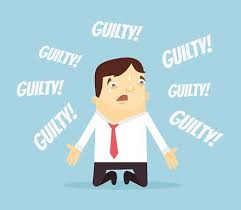
But when he came to a spiritual understanding of the law, that is, when Holy Spirit showed him that the law condemned not just his actions, but the thoughts, intents and motivations of his heart, everything changed. At that point, he experienced guilt and conviction. His conscience told him that even the hidden inward lusts/desires of his heart were sin. Now he found himself guilty in the sight of God and spiritually dead.
DIGGING DEEPER: I was once alive apart from the law: Paul speaks of his own personal experience, but his situation mirrors that of all unsaved people who are depending on their own righteousness to justify them in God’s sight. He uses himself as an example to avoid offending the Jews.
Naturally speaking, Paul was never apart from the law because he grew up in a devout Jewish household. The law was an integral part of their everyday lives.
Like all those under the law, he focused his attention on external conformity to its commands – being circumcised, performing the prescribed sacrifices, participating in feasts and holy days, reading the law, etc. He did not feel the spiritual pull of the law upon his inward heart and mind. Despite all his efforts, he was essentially a self-confident sinner.
Paul does not give us the exact details of his own case in his letter to the Romans, but we can see a partial picture in scripture. In Acts 8-9, we find Paul acting in a state of confident self-righteousness in the law. He was clearly impetuous, angry and unrestrained. He did everything in his power to persecute any Jew who converted to Christianity:
Acts 8:3 – But Saul was ravaging the church, and entering house after house, he dragged off men and women and committed them to prison.
He didn’t mind a little murder either – we know he fully approved of the stoning of Stephen (Acts 8:1).
At that time, he had a certain amount of spiritual peace, i.e., he believed he was accepted in God’s sight. He was not experiencing any guilt or conviction of sin. Although he did not know it, he was full of vain hope, false satisfaction and presumptuous confidence.
But when the commandment came: But all that false confidence vanished when Holy Spirit quickened his heart and mind. When the Spirit touched Paul during and after his experience on the road to Damascus and caused him to spiritually understand the meaning of the law (that it condemned all sinful lusts, affections and inclinations), he became aware of his own sin and his inadequacy to remove it.
1 Timothy 1:15 - This is a faithful saying, and worthy of all acceptance, that Christ Jesus came into the world to save sinners; of whom I [Paul] am chief.
Sin came alive and I died: The phrase ‘came alive’ refers to resurrection. In other words, Paul says that sin was lurking in his heart from birth, but it was dormant because he did not understand the true meaning of the law. He did not feel or recognize his sin.
But when Holy Spirit gave him a true understanding of the spiritual meaning of the law (when the command came), sin was instantly resurrected/made alive. Like every sinner, Paul was placed under the guilt and misery of sin. All of his carnal joy, self-confidence, pride, satisfaction and peace suddenly died. Paul realized his true spiritual state of death. (As with all sinners, this is a good thing because it causes us to seek life through the atonement of Jesus Christ.)
Romans 7:10 – The very commandment that promised life proved to be death to me.
GENERAL SUMMARY: The law held the promise of life because it could justify anyone who fully and perfectly kept it. However, for anyone who did not keep the whole law perfectly, it was a source of condemnation and eternal death.
The law brought a duty to obey it and outlined the punishment for failure, but it did not provide any strength or assistance to resist sin or deny evil propensities. Therefore, the promise of life that it held proved to be death in the end.
DIGGING DEEPER: The very commandment that promised life: As we noted in our prior studies, the law was capable of giving life to everyone who could perfectly keep it.
Leviticus 18:5 – You shall therefore keep my statures and my rules; if a person does them, he shall live by them: I am the Lord.
The problem is that no one could do that.
Proved to be death to me: Because no one could perfectly keep the law, the law did not bring us life. It put us under the sentence of eternal death. Nevertheless, the fault is not with the divine commands of God, but with the sinfulness of our own natures.
Romans 7:11 – For sin, seizing an opportunity through the commandment, deceived me and through it killed me.
GENERAL SUMMARY: Sin plays the role of a tempter. It promises us everything we desire, but when we act upon it, the law is triggered - it judges us, condemns us as sinners, and sentences us to eternal death. In this way, sin deceives us and brings us death.
DIGGING DEEPER: For sin, seizing an opportunity through the commandment, deceived me: This verse is essentially a repeat of verse 8. Sin draws us into disobedience by promising us gratification, control, independence and impunity (much like it did to Eve), but all of its promises are lies which seduce us from the path of righteousness. 
And through it killed me: Once we sin, the law is automatically activated. It judges and condemns us. At that point, we are wretched and miserable, with no way of escape from the penalty of our sin – death. Thus, it was sin that brought us death, not the law.
As Paul is about to tell us, the law itself is holy and good. It couldn’t be anything else because it is divine, coming from the hand of God himself. Sin, on the other hand, is the perpetrator of death. The law was simply the passive instrument used by sin to bring destruction on mankind.
But there is also good news. When sin trapped us by the law, it was fully exposed. It could no longer hide in the shadows. Mankind was able to see what a heinous, vicious, evil entity sin truly is. Once mankind was aware of its presence, we sought a way of escape, which was provided to us by God through the atonement of Jesus and the revelation of Holy Spirit.
Romans 7:12 – So the law is holy, and the commandment is holy and righteous and good.
GENERAL SUMMARY: Paul concludes that God’s laws are holy, righteous and good. The law is NOT the source of our sin, as the Jews supposed.
DIGGING DEEPER: So the law is holy: In this instance, ‘so’ is a word that introduces a conclusion for the last five verses (7-11).
The conclusion is this - God’s commands are holy:
- They identify the paths of righteousness.
- They instruct us how to live holy lives that are pleasing to God.
- They teach us to imitate God’s purity, submit to his providence and live in obedience to him.
- The law is holy because God is its author and nothing unholy can ever come from him.
The commandment is holy: The law resembles God; it is a picture of his holy nature and a declaration of his holy will. It lays out the requirements of a holy heart and life. It teaches us our duty to God - to live holy, righteous, self-controlled and godly lives which are pleasing in his sight. Clearly, his commands are holy and they should be honored and revered.
And righteous: God’s commands are righteous and just. They treat each person impartially, demanding perfect obedience to all God’s laws and handing down honest and equitable judgement to all. His righteous and just commands also define our duty to others:
Mark 12:21 – The second is this: ‘You shall love your neighbor as yourself.’ There is no other commandment greater than these.
The bottom line is that because God’s commands are righteous and just, they cannot be the source of anything wrong or deceptive.
And good: God’s laws are pure and free of anything that causes harm. They are blameless and do not cause us to sin.
God’s law is good because God is good and nothing evil can come from him. His law is good because it works good in those who adhere to it, leading them to both earthly and eternal good.
Romans 7:13 – Did that which is good, then, bring death to me? By no means! It was sin, producing death in me through what is good, in order that sin might be shown to be sin, and through the commandment might become sinful beyond measure.
GENERAL SUMMARY: Paul has clearly proven that the law is good. But a question still remained in the minds of his Jewish readers – how could it be that a good gift from God (the law) brings about death?
Paul answers this question by showing that it was not the law which caused death, but sin. The law reveals sin for what is really is – vile, heinous and evil. It is absolutely necessary for the atrocity of sin to be revealed, otherwise it would not appear as sin.
DIGGING DEEPER: Did that which was good bring death to me: Paul now asks a question that would surely spring into the minds of his Jewish readers. If the law is indeed good, did it bring death to me? Can that which is good be deadly? Is that even possible? 
By no means: Paul’s answer is a resounding ‘NO!’. He then goes on to reiterate once again that the cause of death is not the law, but sin which springs from our own depraved natures.
It was sin, producing death in me through what is good: Sin is sneaky. It secretly flowed through the conduit of what is good (the law) in order to bring us death. But once we gained a true understanding of the law through Holy Spirit, sin could no longer remain hidden. It could no longer ‘play dead’. It was forced to reveal its true colors and ultimate goal – to bind us under the penalty of eternal death and separate us from God.
In order that sin might be shown to be sin: Paul has already shown that the purpose of the law was to reveal God’s commands and ways so we could walk in obedience to him. Now he reveals yet another purpose found in the law – to reveal the true evil nature of sin.
When people are sinners, they are ignorant of the sin within their lives and the fatal penalty which they will derive from it. In order for them to desire and seek repentance, they must fully understand the nature, scope and outcome of sin.
This is done by Holy Spirit when he reveals the exceedingly hateful, destructive and malignant evil of sin to the conscience of the sinner. Once that is done, the sinner experiences conviction and seeks the mercy of God.
And through the commandment might become sinful beyond measure: Thus, we find that the relationship between sin and the law is this:
- The law of God is holy, righteous, good and perfect.
- Sin hides in our hearts/minds waiting for an opportunity to incite us to break God’s law.
- Sin goads us into breaking the law of God by promising us everything we desire. But the moment we reach out and take what is offered, the law is activated and we are found guilty of transgression. As a guilty defendant, we are under a sentence of spiritual death.
- While the law condemns us for our sin, it simultaneously does something beneficial – it reveals the true scope and intent of sin. It fully illuminates sin and shows it for what is really is – exceedingly pernicious, foul, poisonous, despicable and utterly evil.
- A true knowledge of sin brings Holy Spirit conviction, which points us to Christ for deliverance.
Based on the facts presented, we can be certain that the cause of spiritual death is not the law, but our own actions. We are influenced by sin, which has one single overriding goal – to bring about the death and destruction of every human being by separating them from God, the giver of life.
Let me offer you some encouragement:
Today’s post gives us an understanding of the basic principles of sin:
First, it deceives us. Sin always entices us with what we desire or what we hope for, but it never presents a full picture. It shows us only good and desirable outcomes; it never reveals the evil consequences that we will experience here on earth.
For example, sin may tempt you to have an affair. Working through your mind and imagination, sin will only show you how desirable and exciting that will be. It tells you that you deserve to have the pleasure you crave. It assures you no one will find out, which makes your secret pleasure all the more enticing.
Once sin convinces you to take its bait, it springs the trap of death.
Only then do you discover the true consequences/destruction of sin - the death of your own marriage, the breakup of your family, the ruin of your finances, the embarrassment you will suffer, the loss of your ministry, the smear of your good name, or even the disease you may contract.
Here is a fact: Sin seeks only our destruction, never our good. All of its promises are false. Sin is evil and so by default it can only steal, kill and destroy, bringing debasement, humiliation and spiritual death.
So let me offer you this encouragement – DO NOT PLAY WITH SIN. You cannot control it. It is as dangerous as a viper hidden in a box of candy. If you dare to put your hand in the box, you will be bitten!
Let me offer you some relief:
You have, no doubt, been caught in the trap of sin. I know this because I have too. In fact, Paul tells us that ALL have sinned (Romans 6:23). 
If you find yourself in the midst of a terrible situation where you are dealing with the destructive consequences of sin in your life, let me offer you some relief – all is not lost; there is still hope:
- God is still with you.
- When you repent, his forgiveness is guaranteed (I John 1:9).
- God specializes in restoration.
- What can’t be restored can still be used for his glory.
After a major catastrophic sin, restoring your relationship with God is the most important thing. Once that is done, you can seek him for some measure of restoration. That process may be a long and painful one, but he will walk through it with you. Even if restoration doesn’t look like you hoped it would, your testimony can still bring him glory and be useful in his kingdom.
Let me offer you some strength:
In today’s post, we noted that sin is vile, heinous and evil. It brings destruction into our lives. The best defense we have is to shut the door before it enters!
Many Christians today are weak and undisciplined. They do not regularly read the word, spend time in prayer or practice fasting. But perhaps worst of all, they do not strive to control the throughs of their minds.
Your mind is like a farmer’s field. Whatever you plant there will grow and produce fruit. Satan continuously bombards us with opportunities to sin. If we let those pictures, thoughts, desires, ideas or feelings stay in the field of our minds, destructive crops of sin will grow. Eventually, they will bear fruits of destruction and death.
James 1:15 - Then when lust has conceived, it brings forth sin: and sin, when it is finished, brings forth death.
So be a disciplined Christian - it’s one of your best defenses against sin! When Satan throws the seeds of sin into your mind, weed them out immediately. You can do this by changing your thought patterns, by reminding yourself of what the scriptures say, or by engaging in praise and worship.