
Romans 6:1 – What shall we say then? Are we to continue to sin that grace may abound?
Now we come to Romans chapter six. Up to this point, Paul has proven that all people are sinners and no one can be justified in the sight of God through works. Rather, mankind is justified by faith in the atonement freely provided by Christ. That atonement brings much, much more than simply justification. It also brings peace, joy, hope of heaven, relationship with God, the presence of Holy Spirit, strength to overcome and other benefits too. 
At the end of chapter five, Paul concluded by saying that where sin abounds, grace much more abounds. He proved that grace is more than sufficient to cover all our sin.
This raises a new train of thought. If divine grace is as abundant as Paul just declared, won’t this cause people to continue (or even increase) in sin, since the abundance of divine grace can cover the cost? Why bother even trying to live by the commands of God? Besides, if God is glorified by forgiving us, wouldn’t more sin bring him more glory?
In the next three chapters, Paul will show that the opposite is true. God’s plan of salvation (justification by faith in Christ) does NOT lead people to sin. It leads people to holiness. Furthermore, God is never honored by sin. That which is detestable in his sight cannot bring him glory.
In this chapter, Paul will use various arguments and illustrations to show that once we have a relationship with Christ, the Father and Holy Spirit, our hearts are changed. These changes produce a hatred of sin and a desire for holiness.
GENERAL SUMMARY: Based on the proven concept of the abundance of grace freely given to mankind, we might assume that people will (or should) keep on sinning in order to display the grace of God. This is wrong thinking.
DIGGING DEEPER: What shall we then say: What can we conclude or what should we do, now that we know justification is the free gift of God which comes through Jesus Christ and that is has nothing to do with our own works?
Are we to continue in sin that grace may abound: There is evidence to suggest that during the early days of the church, a false and deadly concept was gaining a foothold in the church. Specifically, some people were saying that the doctrine of justification by faith made obedience to the moral law useless. In other words, there was no need to live a holy life, because grace was big enough to cover all sin. Some even suggested that an increase in sin would be good, because that would magnify God’s grace (Galatians 5:13, I Peter 2:16, Jude 4)!!
To make things even worse, some people were saying that the apostles themselves ordered their disciples to sin that grace might abound (Romans 3:8)!
But just as he did in chapter three (Romans 3:31), Paul refutes that false belief. He proves that justification by grace does not make the law useless. In fact, the opposite is true. Because of the free gift of grace, Jews and Gentiles are under an obligation to live holy lives.
He also shows that God cannot be glorified by sin. Sin is the cause of wrath, not grace (the effective cause of grace is the love and compassion of God). Therefore, God is not glorified in the commission of sin, he is glorified when the power, influence and reign of sin in our lives is destroyed. Grace does not teach us to engage in sin, but to abstain from it.
Romans 6:2 – By no means! How can we who died to sin still live in it?
GENERAL SUMMARY: Before giving a fuller explanation of his position, the apostle avoids any confusion by giving his readers a clear answer: NO! NEVER! We should NEVER continue in sin so that grace can abound. He will show that this is actually an impossible scenario, since Christians are dead to sin.
DIGGING DEEPER: By no means: Paul gives a very clear and very strong denial of what was implied in verse one. In our generation we might say ‘no way’ or ‘that’s not happening’. The bottom line is that sin can never be used to promote or advance grace. In the next few verses, he will tell us why.
How can we who died to sin still live in it: To live to something is to be wholly given up to it; to have an intimate connection with it at all times. For example, if we say a person lives for football, that person is focused on everything that pertains to football whether they are eating, sleeping or breathing. All their thoughts are continually centered on it, all their opinions are filtered through it, and all their spare time is devoted to it.
Now let’s consider the opposite scenario. To die to something is to despise it, to have nothing to do with it; to be totally separate from it. For example, when a person quits smoking, we could say they were dead to tobacco.
We can say the same for a person – we sometimes say a certain person is ‘dead to us’ which means that we no longer acknowledge them or have anything to do with them. All fellowship/relationship with that person is cut off.
Bearing this in mind, it becomes obvious that if you are dead to something, you can’t continue to be part of it.
Paul’s point is that mankind was once dead to righteousness because of sin (Romans 6:23). But now that Jesus has died and been resurrected, the potential exists for each person to become dead to sin and alive to righteousness, providing they place their faith in his atoning work.
II Timothy 2:11 – It is a faithful saying: For if we be dead with him, we shall also live with him.
Before we go any further, we need to understand the difference between justification and sanctification. Both involve being dead to sin, but in slightly different ways.
Justification: When we place our faith in the sacrifice of Christ (when we become saved or accept salvation) we are immediately justified. Justified persons are dead to sin because sin is no longer imputed to them; that debt was paid in full by the blood of Christ.
Because the power of sin has been broken in the lives of justified persons, death no longer has authority over them either. Christ will raise them from the dead at the last day and give them eternal life in heaven.
The point is that justified people are dead to sin because Christ broke the power of sin (and death) in their lives once and for all. This is an instantaneous event that happens the moment one trusts in Christ. At that exact time, the ‘old man’ dies and we become new creations in Christ:
II Corinthians 5:17 – Therefore, if anyone is in Christ, he is a new creation. The old has passed away; behold, the new has come.
Sanctification: Sanctification is the process of dedicating ourselves to God. It can only occur after we are justified. Once we accept Christ as Savior, Holy Spirit comes to dwell in our hearts. He initiates and assists us with the process of sanctification. In this process, we actively practice putting sin to death (dying to sin) in our thoughts, actions and bodies.
Because of the change Jesus brought about when he justified us (the old man has passed away and we are made new), sin is no longer our goal. We no longer take pleasure in it; we find it despicable and abominable. We do everything in our power to remove it from our lives in every way, shape and form. This is NOT an instantaneous event. As Paul will shortly indicate, it is a protracted process that takes place over time. Although we will become holier as time goes on, this process won’t be fully complete until eternity. 
This means that Christians will continue to fall into sin from time to time. We must actively work to crucify the evil tendencies that are still in our hearts. The bottom line is that the power of sin in our lives is broken, but we need to enforce that victory by dying to the sin in our lives on a daily basis.
Justification and sanctification are both forms of dying to sin. Dying to sin is exemplified in the Christian rite of baptism.
Romans 6:3 – Do you not know that all of us who have been baptized into Christ Jesus were baptized into his death?
GENERAL SUMMARY: The rite of baptism is a spiritual representation of the death and resurrection of Christ. In baptism, Christians identify with Jesus; we become dead to sin, and we are resurrected into a life dedicated to God.
Paul’s point is this: Because we are dead to sin, we no longer want to have anything to do with it. Our natural inclination will not be to continue in sin or to increase in sin, it will be to eradicate (crucify) it from our lives.
DIGGING DEEPER: Do you not know: Paul is in the process of proving that free, abundant grace does not result in increased sin. In fact, the opposite is true. God’s divine plan of salvation results in hatred of sin and a devotion to holiness. This truth is reflected in the rite of baptism.
By using the phrase ‘do you not know’, Paul is saying that this truth should be clearly evident to all Christians.
All of us who have been baptized into Christ Jesus: The phrase ‘all of us who have been baptized’ means all professing Christians. All Christians should follow the command of the Lord to be baptized in water.
When were you baptized? Since it was likely a long time ago for many people, let’s take a few minutes to review what we know about baptism.
Baptism is an ordinance (or sacrament) of the church. Ordinances are outward rites or symbolic observances commanded by Jesus. They are visible, outward declarations/signs of invisible, inward changes that have taken place in the heart of the believer.
Protestant churches observe two ordinances – water baptism and the Lord’s Supper (communion). The Roman Catholic church also observes the ordinance of baptism, along with six others (confirmation, eucharist/mass, penance, unction/anointing the sick with oil) marriage, and orders/ordination of priests/consecration of nuns).
Jesus established water baptism as an official ordinance when he gave us the Great Commission:
Matthew 28:19-20 – Go therefore and make disciples of all nations, baptizing them in the name of the Father and of the Son and of the Holy Spirit, teaching them to observe all that I have commanded you. And behold, I am with you always, to the end of this age.
Jesus set an example for us by being baptized himself in the Jordan river by John the Baptist (Matthew 3:13-17). As we would expect, all the apostles upheld the commandment of Jesus for converts to be baptized (Acts 2:38, Acts 10:48, etc.). 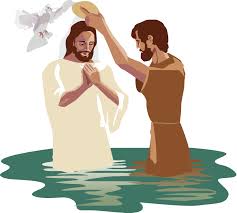
As we already mentioned, baptism is an outward sign of something that has taken place in the heart of a person. Baptism is a declaration. It affirms that we have taken the name of Christ, that we have been spiritually ingrafted or implanted in him, that we have become members of the body of Christ (the supernatural union of the believer with Christ as our head). Baptism signifies a permanent and intimate relationship with Jesus.
Galatians 3:27 – For as many of you as were baptized into Christ have put on Christ.
The word ‘baptize’ comes from the root word ‘baptizo’ which means to immerse. Therefore, in the Protestant church, people are normally baptized by being fully immersed in water and then being brought up again. As they are being submersed, the pastor will decree that the Christian is being baptized in the name of the Father, the Son and the Holy Spirit, as commanded by Jesus in Matthew 3:13-17.
One very important point needs to be made here. We are not saved because we are baptized, we are baptized because we are saved.
Salvation or justification is the result of repentance for your sin. It occurs when you ask Jesus to forgive you for your sins and you invite him to be Lord of your life. Once you have done that, THEN you should be baptized in water, because baptism is an outward sign of the change that has taken place in your heart.
Baptism symbolizes the work of Christ within our inner man. Let me explain. As you well know, Jesus died upon the cross, he was buried in the tomb and arose on the third day. Likewise:
- When the Christian is baptized, they are publicly declaring that their sin has been nailed to the cross and they are now dead to sin.
- Being submersed under the water is symbolic of burying our old nature (old man) which is now dead to sin.
- Coming up out of the water is symbolic of the resurrection of Christ into new life. Because of Jesus, we too are raised to newness of life and are dedicated to holy living.
In other words, baptism is an outward declaration that the Christian has died to his life of sin and is now alive to God. Because of this, the Christian will no longer live in sin, regardless of the boundless grace provided by Jesus.
Were baptized into his death: The baptism of a believer has a strong similarity to the death of Christ. He died FOR sin. Because of what he has done for us, we die TO sin.
Romans 6:4 – We were buried therefore with him by baptism into death, in order that, just as Christ was raised from the dead by the glory of the Father we too might walk in newness of life.
GENERAL SUMMARY: After his death on the cross, Jesus was buried in a tomb. Three days later, he was resurrected to life. Similarly, during baptism the believer is submersed in water which signifies being buried after the death of sin. When the believer is lifted from the water, it is symbolic of being raised in newness of life; our lives are now dead to sin and we live to God.
DIGGING DEEPER: We were buried therefore with him by baptism into death: Paul’s goal here is to show that by the solemn profession made at baptism, we declared ourselves dead to sin, just as Christ was dead to the world around him when he was buried. This is a symbolic action which testifies to the world that we have trusted in Christ as our savior.
Let’s think of it in practical terms. Burial is the natural, final consequence of death. Despite what you might see in horror films, buried people don’t return to life. When you bury someone, it shows that no revival is possible.
Thus, when we are buried with Christ in baptism, we are fully dead to sin. It no longer reigns/has authority in our lives. It no longer has us in bondage. Because we have been justified, sin’s power over us has been broken and it can never rule over us again.
Just as Christ was raised from the dead by the glory of the Father: Jesus rose from death by the glorious, omnipotent power of God. Only he could accomplish this. Similarly, we rise from the water of baptism into a new life of holiness to God. This is only possible by the power of God at work in the plan of salvation.
Once again, the metaphor of dying implies two things:
- First, immediate freedom from the bondage of sin. This was accomplished when we first placed our faith in Christ. He did what we could not do – he broke the power of sin and death in our lives, making us new creatures in Christ. We call this justification.
- Second, dying implies a continual mortification of our flesh; a life of daily death to our sinful natures and impulses. We call this sanctification.
Colossians 2:12 - Buried with him [Jesus] in baptism, in which also you are risen with him through the faith of the working of God, who has raised him from the dead.
We too might walk in newness of life: Paul uses the word ‘walk’ to mean our conduct or the manner in which we live.
Christ was raised from the dead by the glorious, omnipotent power of God, which is the power of the Father (Romans 6:4), the Son (John 2:19) and Holy Spirit (Romans 8:11). Just as Christ arose, so should we arise out of the grave of sin and walk in the new life of holiness he has made possible for us.
Our lives are inextricably connected to that of Christ. Just as he made the transition from death to life, so our old sinful man/nature is destroyed by the death of Christ while his resurrection makes us new creatures/creations, designed to live in holiness to God.
I Peter 1:16 – Because it is written, ‘You will be holy; for I am holy.’
Paul stresses the power of God in the resurrection of Christ. This is fitting for two reasons. First, it reminds us that God is well able to raise us from death. Thus, we have full confidence in his promise of a final resurrection at the end of time. Second, only the power of God is able to resurrect the dead soul of a sinner and enable him to walk in holiness.
Romans 6:5 – For if we have been united with him in a death like his, we shall certainly be united with him in a resurrection like his.
GENERAL SUMMARY: When we trust in Christ as our Savior, we are identifying with his death on the cross. Because he rose to immortal life after his death, we too can expect to enter a new spiritual life of holiness (and eternal life in the next age).
DIGGING DEEPER: If we have been united with him in a death like his: In this study, we use the ESV version of the bible, which says ‘united’. Your translation may say ‘becoming one’ or ‘planted together’. 
This is an unusual phrase which literally means ‘sown or planted at the same time’ or ‘plants that sprout up together at the same time’. It describes things that are intimately connected or joined together.
For example, when a farmer plants a field of corn, the corn is ‘planted together’ in that the seeds are planted at the same time, in the same place, and they will (more or less) spring up at the same time. They will grow together, ripen together and wait for the harvest together. We might describe it as a field of corn, but it is actually thousands of similar plants growing all at once.
We are like that field of corn. Because Christians are intimately connected to Christ in both his death and resurrection, we would expect our lives to resemble his – they will be lives of holiness, not wickedness and corruption.
We shall certainly: There can be absolutely no doubt about it - if we die to sin through Christ, we will also be resurrected to eternal life through Christ. The example of Christ’s resurrection from the dead is the proof that God will also raise us up at the last day.
Be united with him in a resurrection like his: If we resemble Christ in regard to his death (he died FOR sin, we died TO sin), we should also expect to resemble him in regard to the resurrection. He rose from the grave, we rise from the death of sin to a new life where sin is no longer our master. Because the power of sin is broken, we can live lives of holiness that are pleasing to God.
Colossians 3:1 – If then you have been raised with Christ, seek the things that are above, where Christ is, seated at the right hand of God.
Let’s go back to the analogy of being ‘planted together’. Picture a branch that has been grafted into a tree. When we trusted in Christ as savior, we were removed or cut off from the sinful, degenerate stock of Adam and grafted/planted together into the noble and righteous stock of Christ. We receive our life from him just as the branch receives life from the tree trunk. Because we receive life from him, we will grow to be like him.
We might also think of it like a seed planted in the ground. The sacrificial death of Christ is the soil into which believers are planted, like a corn kernel is planted in the ground. We grow out of his sacrifice, deriving strength and life from him. Since he is dead to sin, so are we. Eventually, through his strength, we produce fruit. Again, this is a picture of unity and intimacy. If we are alive in Christ, we are dead to the ways of sin.
Once again, Paul proves his point - free and bountiful grace does not lead to increased sin, but to increased holiness.
Romans 6:6 – We know that our old self was crucified with him in order that the body of sin might be brought to nothing, so that we would no longer be enslaved to sin.
GENERAL SUMMARY: In the death of Christ our old man (our corrupt nature) died. Because it is dead, it no longer reigns or has power over us.
DIGGING DEEPER: We know that our old self: Paul uses the phrase ‘we know’ to indicate that the statement he is about to make is obvious and widely known to all Christians.
Paul uses the phrase ‘old self’ or ‘old man’ to denote our sinful and corrupt natures which include the passions, lusts and evil desires that exist in our hearts before they are renewed by Christ. This is the nature passed down to us from Adam.
Ephesians 4:22 - …to put off your old self, which belongs to your former manner of life and is corrupt through deceitful desires…
(See also Colossians 3:9, Galatians 5:24, Colossians 2:11, I Peter 4:1). The old man loves sin and is eager to indulgence every kind of evil desire and wickedness. 
Was crucified with him: The power of sin has been broken or brought to nothing by our justification. Now, with the help of Holy Spirit, we will finish the job through sanctification.
Paul personifies our corrupt nature as an ‘old man’ who is put to death by crucifixion – a slow, agonizing and tortuous way to die. Paul uses this phrase to describe the painful and protracted struggle which every Christian goes through as we circumcise our hearts, kill our worldly desires and die to our evil passions so we can live our lives unto God (sanctification).
Our corrupt nature must be crucified to show our conformity and likeness to Christ in his crucifixion. The old man is fastened to the cross of Christ for only by its power he is slain (we are powerless to kill our old man by ourselves). We can only do so through by partaking of the death of Christ.
Every Christian understands this battle because it is common to all of us. Though Christ broke the power of sin for us, we still must enforce that victory in our own lives.
In order that the body of sin might be brought to nothing: The ‘body of sin’ is simply another way of saying the ‘old man’. In this case, Paul pictures all of our various sins and wicked desires joined together into a single monstrous body which is ready, willing and able to use all of its members to commit sin. Nevertheless, it is destroyed by the work of the cross.
So that we would no longer be enslaved to sin: The idea presented here is that when we were children of Adam, sin reigned over us; it was impossible for us to do anything BUT sin. However, once we were justified by faith, we were grafted into Christ, who delivered us and made us victorious over sin. We do not immediately cease to sin, but victory is assured.
Romans 6:7 – For one who has died has been set free from sin.
GENERAL SUMMARY: The person who has conformed to the death of Christ has been justified/set free from the reign of sin because death releases one from bondage.
DIGGING DEEPER: When a servant dies, he ceases to be under the control of his master. No matter what the master does, he no longer has any authority or jurisdiction over the servant. He can no longer dictate what the servant will do.
Likewise, the Christian was subject to sin before his conversion but now he has become dead to it. He is therefore released from the control of his former master, Sin. Sin no longer has dominion in the life of the believer; it cannot force him to do anything.
The overall meaning of the passage is that person who has accepted Christ by faith and been made a partaker of Holy Spirit, has had his old man destroyed is not only justified freely from all sin, he is also wholly sanctified to God. As such, the Christian will not continue or increase in sin, he or she will increase in holiness.
Let me offer you some encouragement:
Today’s post speaks about the rite of baptism. Baptism is a command of God. It is a declaration that you have been justified by Christ, and you are in the process of becoming sanctified.
If you haven’t been baptized, you need to do so immediately. Don’t rebel against a direct command of God.
If you were baptized as a child, you should consider doing it again since you are now at an age where you are declaring for yourself that you are submitted to Christ.
If you were already baptized at an age where you understood what you were doing, but you are rededicating your life to God, you can certainly be baptized again if you feel the need.
Let me offer you some relief and strength:
It is one thing to sin. It is a totally different thing to serve sin.
To serve sin is to willingly yield our obedience to evil, to embrace and indulge in every wickedness that comes into our minds. No Christian would do that.
However, during the process of sanctification, we will have failures and make mistakes. When that happens, don’t sweat it! We can simply bring those sins to the cross, where Jesus will cover them with his blood.
Whatever happens, never give up! Holy Spirit will continue to strengthen us as we active seek to live holy lives unto God.